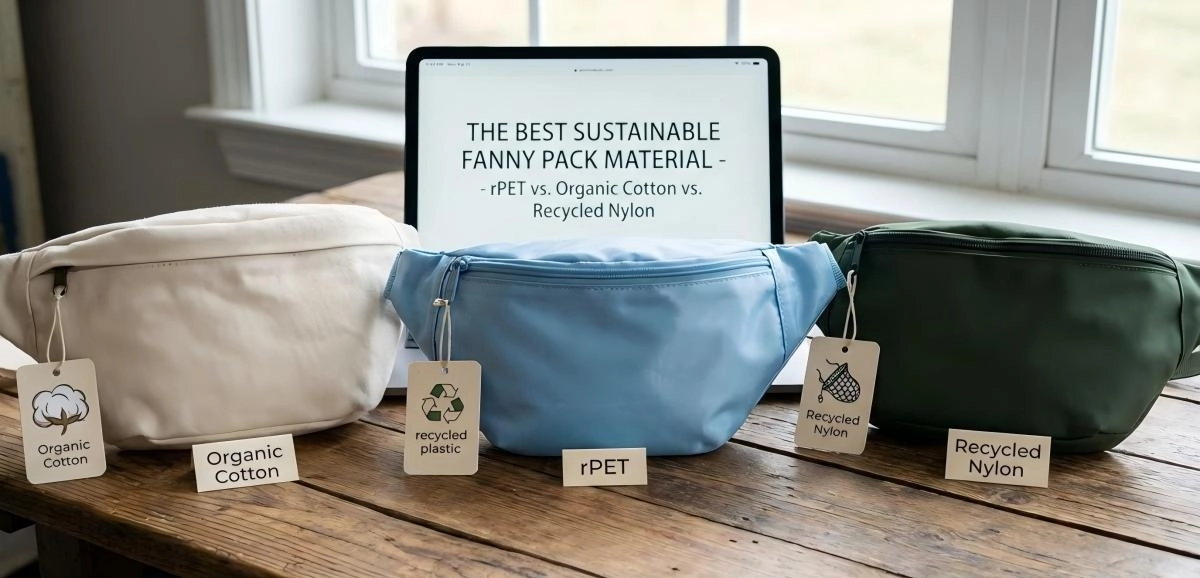
The Best Sustainable Fanny Pack Material
rPET vs. Organic Cotton vs. Recycled Nylon
The Best Sustainable Fanny Pack Material
rPET vs. Organic Cotton vs. Recycled Nylon
As a professional Chinese sustainable product sourcing supplier, Sourcing Find China specializes in eco-friendly items like rPET sustainable fanny packs, which are one of our flagship products. This article will explore three mainstream sustainable materials—rPET, organic cotton, and recycled nylon—discussing their advantages and differences in fanny pack production. It aims to help your sustainable development brand select the most suitable and eco-friendly material for fanny packs (sustainable bag materials). Drawing from over 10 years of supply chain experience and GRS certification, we provide authoritative analysis to ensure you find the best material for fanny packs.
1. rPET: An Eco-Friendly Material Transformed from Waste Plastic
rPET (Recycled Polyethylene Terephthalate) is derived from recycled plastic bottles or post-consumer plastic waste, processed through cleaning, shredding, and reformation into fibers. Each rPET fanny pack (similar to a recycled nylon fanny pack) can recycle approximately 10-15 plastic bottles, significantly reducing ocean plastic pollution. According to data from National Geographic, rPET helps mitigate plastic waste and reduces energy consumption by 75% compared to virgin polyester.
Advantages:
- Significantly Reduces Plastic Waste: Gives a second life to plastics that might otherwise end up in oceans or landfills.
- Lower Carbon Emissions in Manufacturing: Compared to virgin polyester, it saves about 50% in energy and reduces CO₂ emissions by approximately 60%.
- Durable, Lightweight, and Water-Resistant: Ideal for outdoor and travel fanny packs.
- Excellent Color Performance: Easily adaptable to diverse design styles.
Disadvantages:
- Less breathable than natural cotton materials.
- While recyclable, recycling systems are not yet fully widespread.
Suitable For: Consumers who prioritize durability, lightness, outdoor performance, and reducing plastic pollution. As an rPET fanny packs manufacturer, our rPET materials are 100% GRS-certified, ensuring traceable supply chains. We’ve assisted numerous clients in Europe, America, and Australia in launching high-quality products.
2. Organic Cotton: A Natural and Comfortable Eco Choice
Organic cotton is grown without pesticides or chemical fertilizers, verified through international certification systems for its ecological friendliness. It’s a biodegradable natural fiber. According to a report from SustainYourStyle, organic cotton reduces water consumption by 91% and energy use by 62% compared to conventional cotton, making it ideal for skin-sensitive consumers.
Advantages:
- Natural, Non-Toxic, and Skin-Friendly: Soft and breathable, non-allergenic.
- Sustainability: Biodegradable, supporting soil health and biodiversity. EcoEnclose recommends prioritizing organic or regenerated cotton when necessary.
- Aesthetic Appeal: Easy to dye and print, suitable for fashion brand customization.
Disadvantages:
- Although water usage is reduced, it’s still relatively high (about 10,000 liters per kilogram of cotton).
- Durability is lower than synthetic materials, prone to fading and shrinking.
- In rPET vs organic cotton comparisons, organic cotton’s production costs are 20-50% higher and less suitable for high-intensity use. For waterproof products like fanny packs, rPET or recycled nylon is often more practical.
Suitable For: Consumers who prefer a natural feel, lean toward casual lifestyles, or emphasize “pure natural materials.”
3. Recycled Nylon: High-Performance with Eco Benefits
Recycled nylon is primarily sourced from reclaimed discarded fishing nets, fabric scraps, or industrial waste. Brands like Patagonia commonly use it for outdoor gear. According to an analysis from Tote Bag Factory, recycled nylon reduces greenhouse gas emissions by 50% compared to virgin nylon.
Advantages:
- Strength and Weather Resistance: Extremely wear-resistant, waterproof, and UV-resistant, making it the best material for fanny pack in extreme environments.
- Environmental Benefits: Reduces ocean waste and supports recycling loops. Recycled nylon has higher load-bearing capacity than cotton.
- Lightweight Texture: Perfect for fanny pack styles requiring flexibility and durability.
Disadvantages:
- The production process is energy-intensive and may involve chemical solvents, posing potential environmental risks.
- Compared to rPET, recycled nylon is less soft and slightly more expensive.
- According to Aveco Baggie’s guide, recycled nylon is less adaptable for printing than cotton. Our experience shows that recycled nylon suits high-end outdoor fanny packs, but rPET offers better overall sustainability and cost-effectiveness.
Suitable For: Users who favor high performance, frequent travel, outdoor activities, or need waterproofing.
Material Comparison: Finding Your Best Choice
In rPET vs organic cotton comparisons, rPET is better suited for large-scale production and waterproof needs; compared to recycled nylon, rPET has higher energy efficiency. According to industry data (such as from National Geographic and EcoEnclose), rPET is a balanced choice among sustainable bag materials, especially for startups. Ultimately, the best material for fanny pack depends on your goals: if prioritizing circular economy and cost, rPET is the winner.
| Item | rPET | Organic Cotton | Recycled Nylon |
|---|---|---|---|
| Environmental Impact | Extremely low, reduces plastic waste | Eco-friendly cultivation, but low yield | Reduces ocean waste, low impact |
| Durability | Medium-High | Low | High |
| Water Resistance | Medium-High | Low | High |
| Feel | Crisp | Soft and natural | Smooth with a tech vibe |
| Cost | Medium | High | Medium-High |
Sourcing Find China (www.sourcefindcn.com) offers low MOQ sustainable fanny pack customization services, helping small businesses and DTC brands easily launch eco-friendly product lines. Our team has extensive experience in sustainable sourcing, primarily serving clients in Europe, America, and Australia. The fabrics and factories we select comply with international environmental standards (such as REACH and GRS). No matter which material you choose, we can provide sourcing support, including one-stop services from design to delivery.