Why Clothing MOQ Depends on Fabric, Color and Production — Not Just the Factory
When overseas brands look for clothing manufacturers in China, one of the first questions is often:
The factory may answer:
The buyer may think this factory has a 500-piece MOQ for every product.
But clothing MOQ does not really work this way.
The same factory may be able to make one 500-piece order but not another.
Fabric, colors, trims and product structure can all change the real MOQ.
MOQ is only one part of supplier selection. Brands should also consider product type, order size, quality and production capability when choosing the right clothing manufacturer in China.
1. The Garment Factory Is Only One Part of MOQ
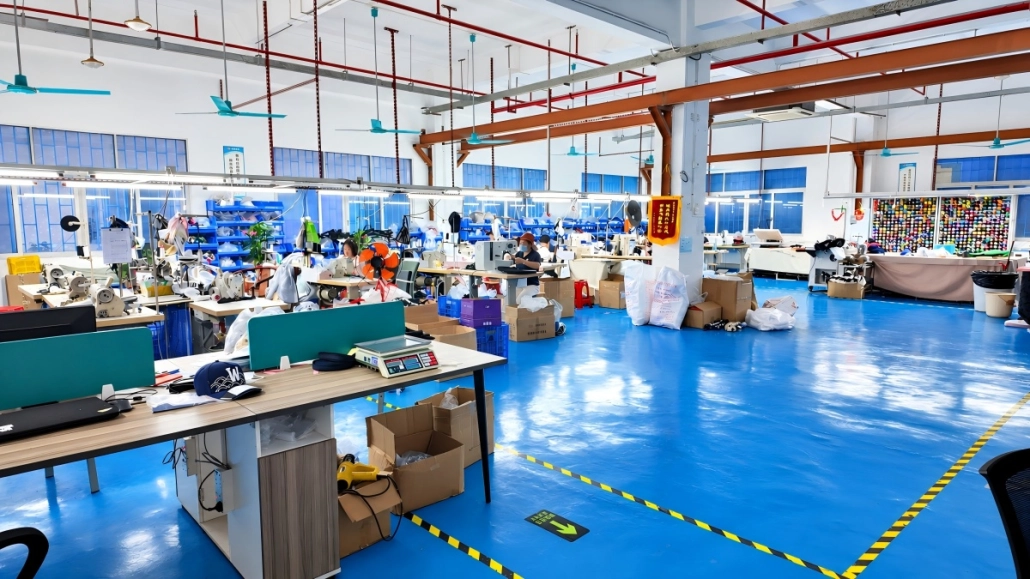
A garment factory has its own minimum production quantity.
Even for a small order, the factory still needs to arrange:
- Pattern making
- Marker making
- Cutting
- Production line setup
- Sewing
- Pressing
- Quality control (QC)
- Packing
If only a few dozen pieces are produced, these costs are harder to divide across the order.
But even if the garment factory agrees to make 200 pieces, the order may still not work.
Fabric, trims, printing and embroidery suppliers may also have their own MOQ.
2. Fabric Is Often the Biggest Limit for Low MOQ
This is one of the most common issues that new clothing brands overlook.
Imagine you need:
The garment factory is willing to make them.
If a suitable stock fabric is available, the order may be easy to arrange.
But if you need:
the situation can be very different.
The factory first needs to find the right fabric.
If the right fabric is not in stock, the fabric may need to be made or dyed specially.
The fabric mill may have its own fabric MOQ.
In this case, the real MOQ limit comes from the fabric supply chain, not the garment factory.
3. Custom Colors Can Increase MOQ Again
Even if the fabric is available, color can create another MOQ.
Common colors such as black, white or grey may sometimes be available in stock.
But if a brand needs its own Pantone color, separate dyeing may be required.
A dyeing mill normally will not start a full dyeing process for only a very small amount of fabric.
This creates a dyeing MOQ.
Fabric from the same dye lot usually has better color consistency.
Many very small dye lots can increase the risk of color differences between batches.
For some products, all-over printing (AOP) can replace custom fabric dyeing to a certain degree, but the cost can increase a lot.
4. More Colors Mean Less Quantity Per Color
Imagine the total order is:
With two colors:
300 black + 300 white
production is relatively simple.
But with six colors:
100 pieces per color
the order becomes much harder to manage.
Each color may need:
- Separate fabric
- Separate dyeing or printing
- Separate cutting management
- Separate trim confirmation
- Separate QC
This is why brands often ask:
The answer depends on the fabric and production method. The total quantity alone is not enough.
5. The Number of Styles Also Affects MOQ
Another common misunderstanding is:
But if those 1,000 pieces are divided into:
10 styles × 100 pieces per style
the factory does not see it as one simple 1,000-piece production run.
Each style may need its own:
- Pattern making
- Size chart
- Cutting
- Sewing process
- Pre-production (PP) sample
- QC standard
More styles also mean more production line changes.
So 2 styles × 500 pieces is usually easier to price and arrange than 10 styles × 100 pieces.
6. Printing, Embroidery and Trims Have Their Own MOQ Too
MOQ can also come from small product details.
- Zippers
- Elastic
- Buttons
- Hangtags
- Care labels
- Woven labels
- Custom polybags
- Printing
- Embroidery
For example, a brand may need a custom-colored zipper.
The zipper supplier may require 1,000 pieces, but the garment order may only be 300 pieces.
The buyer may choose to:
- Buy 1,000 zippers and keep the rest for future orders
- Use a similar stock zipper
- Increase the garment quantity
Real sourcing work is often about finding the best balance between these choices.
7. Why “Low MOQ” Does Not Always Mean a Supplier Is Better for a New Brand
Many suppliers advertise:
These numbers may be correct.
But buyers should ask:
- Can only stock fabrics be used?
- Can only existing colors be used?
- Can measurements be customized?
- Can the logo be customized?
- Can colors be mixed?
- Can a specific GSM be used?
- Can the required material certificates be provided?
If a 100-piece MOQ only means adding a logo to a ready-made product, it is not the same as making clothing from your own requirements.
The important question is not who has the lowest MOQ. It is the MOQ that can actually work for your product.
8. How Can a New Brand Reduce Its First Order MOQ?
If the budget is limited, MOQ can be considered from the product development stage.
Reduce the number of colors
Do not launch 6–8 colors for the first style.
Reduce the number of styles
Put more quantity into the styles with the highest potential.
Use existing fabrics when they are suitable
If an existing fabric already meets the product requirements, a completely new fabric may not be needed for the first order.
Use the same fabric across several styles
This can increase the total fabric order quantity.
Reduce special trims
For the first market test, not every detail needs to be fully custom-developed. These changes are not about reducing quality. They help put the limited order quantity into the parts that matter most.
9. When Should a Brand Accept a Higher MOQ?
Lower MOQ is not always better.
If a product has already been tested in the market and sales are stable, a larger order may bring:
- Better fabric prices
- Lower dyeing cost
- Lower trim cost
- More stable production planning
- Lower unit production cost
If a stable-selling product is always made in very small batches, repeated small orders may actually increase sourcing cost.
10. How Does SFC Handle MOQ?
When SFC helps overseas brands source clothing in China, we do not only ask the factory:
We also check:
- Whether the fabric is in stock
- Fabric MOQ
- Dyeing MOQ
- Quantity per color
- Number of styles
- Trim MOQ
- Printing or embroidery requirements
- Actual garment factory MOQ
Then we find out which part is really causing the MOQ.
Sometimes the answer is not to find a smaller factory.
It may be better to:
- Use a fabric that is easier for small-batch production
- Reduce the number of colors
- Use the same fabric across several styles
For overseas brands, understanding these limits can be more useful than simply getting one MOQ number.
Clothing MOQ Is Really a Supply Chain Efficiency Issue
Clothing MOQ looks like one number.
But behind that number are:
All of these parts need to work together.
So when a factory says:
“MOQ 500 pcs.”
the best next question may not be:
“Can you do 300?”
It may be:
Once the real MOQ limit is clear, it becomes easier to make the first order more flexible without clearly reducing product quality.
Need Help Planning a Small Clothing Order in China?
SFC helps overseas brands check factories, fabrics, trims and MOQ, and coordinate production and clothing quality control in China before an order starts.